
By Brandy Eggeman, Citizen K9 Dog Training & Agility LLC
Dogs are exceptionally sensitive to human body movement, gaze, and posture. While hand signals and gestural cues can be effective in the early stages of shaping behavior, research consistently shows they can cause stimulus overshadowing, cue competition, and failure of verbal stimulus control (Bouton, 2016; Pryor, 2009). As a result, many dogs respond to hand signals or unintentional body language rather than to the verbal cues their owners believe they have taught.
From a learning-theory standpoint, the reliance on hand signals can undermine clarity, reliability, and generalization. This article examines the underlying behavioral science and explains why eliminating hand signals is essential for producing robust verbal command performance.
1. Overshadowing and Cue Competition: Dogs Attend to Visual Cues First
Overshadowing occurs when one element of a compound stimulus becomes more salient than another, leading the learner to attend primarily to the more prominent cue (Pavlov, 1927; Kamin, 1969). In canine training, visual cues—especially hand movements—consistently overshadow verbal cues. Dogs naturally prioritize:
- Human posture
- Hand motion
- Orientation and weight shifts
- Eye direction
- Spatial pressure
Research has repeatedly shown that dogs rely heavily on human body language over verbal speech (Miklósi et al., 1998; Hare & Tomasello, 2005).
Thus, when a handler says “sit” while raising a hand or leaning forward, the dog encodes the visual cue as the controlling stimulus, not the verbal word. This results in cue competition, where the verbal cue never develops strong associative strength (Rescorla & Wagner, 1972).
2. How Hand Signals Disrupt Stimulus Control
For true stimulus control, a cue must produce a predictable behavior relationship: the dog performs the behavior when the cue is present, does not perform it in its absence, and does not perform it in response to other cues (Skinner, 1953).
Heavy use of hand signals interferes with all four elements because:
A. The dog cannot perform the behavior without seeing the handler
A dog reliant on hand movements will fail when:
- The handler is behind the dog
- The dog is looking away
- The handler’s hands are occupied
- The environment is visually distracting
B. Accidental body movements become the real cue
Research shows dogs detect subtle human body shifts more readily than humans detect their own movements (Reid, 2009). Micro-cues such as shoulder shifts, forward leans, or foot movement often become unintended discriminative stimuli.
C. Dogs under stress stop attending to visual cues
Stress modifies attentional focus and sensory processing (Beerda et al., 1998). Under arousal—such as at vet offices, around livestock, or during operational work—dogs often:
- Shift attentional bias to environmental threats
- Reduce visual attention toward the handler
- Lose ability to process subtle gestures
A dog dependent on hand signals will fail under these conditions.
3. Verbal Cues Must Be Conditioned Independently to Avoid Prompt Dependence
Hand signals function as prompts, not true cues. Prompts are meant to be temporarily used and then systematically faded (Terrace, 1963).
The scientifically accepted process for transferring stimulus control is:
- Introduce the verbal cue first
- Pause to allow processing
- If needed, follow with a minimal physical prompt
- Gradually fade the prompt
- Reinforce only responses that occur after the verbal cue
If prompts are not faded, the dog becomes prompt-dependent, meaning the behavior occurs only with the physical movement.
This is one of the most common problems seen in companion-dog training and even among working-dog handlers who unintentionally allow gestures to become permanent cues.
4. Generalization Research Supports Verbal-Only Cue Training
Generalization—the ability to perform a cue in new environments or contexts—is notoriously poor in dogs unless trained explicitly (Schwartz, 2002; Bensky, Gosling, & Sinn, 2013). Verbal commands that are overshadowed by hand signals do not generalize well because the dog responds to context-specific physical cues.
Verbal-only cue reliability increases generalization across:
- Distance
- Lighting
- Handler position
- Handler posture
- Arousal levels
- Environmental distractions
Clear, consistent verbal cues become conceptual for the dog, not situational.
5. Why Working Dogs Require Verbal Cue Reliability
In operational contexts—particularly search and rescue, detection, livestock work, and field obedience—hand signals are often:
- Impossible to use
- Unsafe
- Out of the dog’s line of sight
- Disrupted by darkness, terrain, or distance
Dogs must operate independently and often out of view. Research on working-dog cognition emphasizes auditory cue importance when visual cues are unavailable (Helton, 2010).
A dog dependent on hand signals is unreliable; a dog trained to verbal cue control is functional.
Conclusion
Decades of behavioral research—from Pavlov to modern applied behavior analysis—demonstrate that dogs naturally attend more strongly to visual cues than verbal ones. Using hand signals beyond initial prompting stages creates overshadowing, cue competition, prompt dependence, and reduced generalization.
Eliminating hand signals and developing robust verbal stimulus control produces:
- Clearer communication
- More reliable behavior
- Effective performance under stress
- Independence from handler body movement
- Improved working ability
- Increased safety in real-world environments
For trainers and owners seeking true obedience—not gesture-dependent performance—verbal-only cue conditioning is the most scientifically sound approach.
References (APA Style)
Beerda, B., Schilder, M. B. H., van Hooff, J. A. R. A. M., de Vries, H. W., & Mol, J. A. (1998). Behavioral, saliva cortisol and heart rate responses to stress in dogs. Applied Animal Behaviour Science, 52(3-4), 307–319.
Bensky, M. K., Gosling, S. D., & Sinn, D. L. (2013). The world from a dog’s point of view: A review and synthesis of dog cognition research. Advances in the Study of Behavior, 45, 209–406.
Bouton, M. E. (2016). Learning and behavior: A contemporary synthesis. Sinauer Associates.
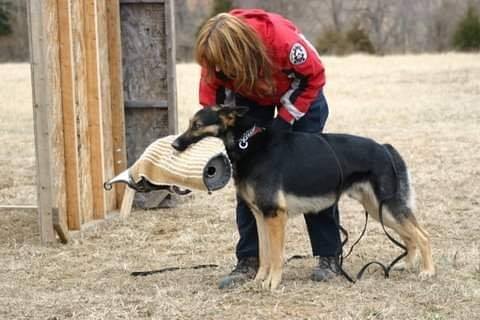
We train with verbal cues. Thank you for all the great information.
Best and most reliable way to train!